How Doctors Train
The road from medical school to independent practice.
Doctor Training Steps
Learn how physicians are trained, who oversees the process, and how accreditation supports high-quality medical education across the United States.

Pre Medical Education
Build the academic foundation for medical school.

Medical School
Learn the science, clinical skills, and their application to patient care needed for professional training.

Residency
Train under supervision in your chosen specialty.

Fellowship
Pursue advanced training in a subspecialty.

Independent Licensure
Meet state requirements to practice medicine.

Board Certification
Demonstrate expertise in a medical specialty.
The Training Pathway Timeline
After earning a medical degree, physicians in the United States complete a residency program, which is a period of supervised clinical training that typically lasts 3 to 7 years depending on the specialty. This training is structured, evaluated, and governed by a set of distinct entities with different responsibilities. Understanding who does what is the starting point.


Building the Foundation for a Career in Medicine
Future physicians spend four years in medical school developing the scientific knowledge, clinical skills, and patient care experience needed to begin their professional training. During this time, students transition from classroom learning to hands-on clinical rotations and prepare for the next stage of their journey. Medical school is accredited by the LCME for MD programs and the COCA for DO programs, a separate step from the residency accreditation that follows.
Where Physicians Learn their Specialty
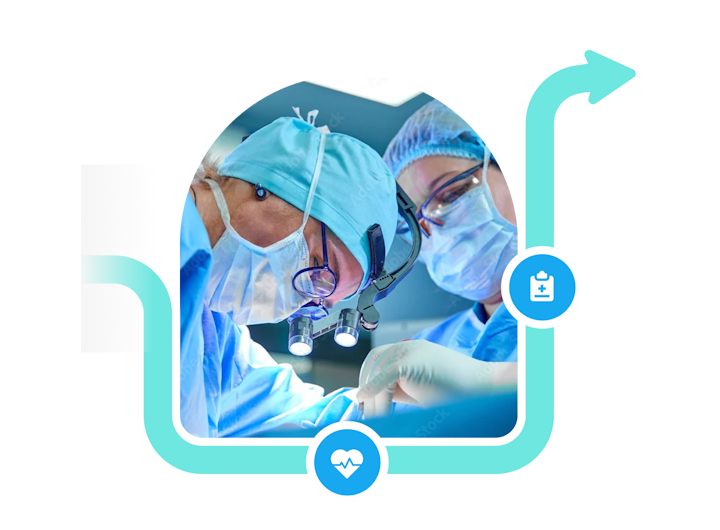
After medical school, physicians enter residency programs where they train under supervision while caring for patients. Residency is the first phase of graduate medical education and provides the real-world experience needed to develop expertise in a chosen specialty. These programs are accredited to national standards for supervision, curriculum, and patient safety, and are reviewed every year.
This brief video explains what residency education is in a physician's professional development journey.
Advanced Training for Specialized Care
Some physicians pursue additional fellowship training after residency to develop expertise in a specific area of medicine. These programs provide focused education and clinical experience for physicians seeking to practice in a subspecialty.

From Training to Independent Patient Care
After completing accredited training and earning a full license, physicians enter independent practice. From here, accountability shifts to the systems that govern practicing physicians. State medical boards hold the license, hospital credentialing bodies verify training and certification before granting privileges, and specialty boards maintain certification. Physicians keep up licensure and continuing education throughout their careers.
The Physician Training Pathway
This video summarizes the steps to becoming a physician, from medical school through independent practice, and identifies the organizations responsible for overseeing each step..
Take the Full Pathway with You
Frequently Asked Questions
Does the ACGME run the Match?
No, the ACGME does not run the Match.
The National Resident Matching Program, commonly known as the NRMP, administers the Main Residency Match and many fellowship matches. The ACGME establishes accreditation and educational standards for residency and fellowship programs, while the NRMP operates the matching process that connects applicants with participating programs.
Some specialties use matching organizations other than the NRMP.
What is the difference between accreditation and certification in medical education?
Accreditation applies to educational programs and the institutions that sponsor them. For example, the ACGME accredits residency and fellowship programs that meet its educational standards.
Completion of an accredited residency or fellowship can be a requirement for certification.
Certification generally applies to an individual physician. Medical specialty boards certify physicians who have met defined standards for education, training, knowledge, experience, and skills in a specialty or subspecialty.
In simple terms, a program is accredited, while a physician is certified. Board certification is separate from the medical license required to practice medicine.
Who funds physician training?
Graduate medical education is funded through several public and private sources.
Medicare provides significant funding to eligible teaching hospitals through Direct Graduate Medical Education payments and Indirect Medical Education payments. Other funding may come from Medicaid, the Department of Veterans Affairs, federal programs administered by agencies such as the Health Resources and Services Administration, state and local governments, teaching hospitals, health systems, and other organizations.
Funding arrangements vary by institution and program, and some hospitals fund residency positions beyond the number supported by Medicare.
Quick Reference Guides
Who Does What
The seven entities that govern physician education and training — and where accountability actually sits.
Media Backgrounder
For journalists, editors, and communications professionals covering GME and physician training.
GME Briefing Sheet
Everything a policymaker, journalist, or community member needs to know.